
Research and Innovation
Innovating in the sanitation sector
SOIL's extensive research program is pushing the sanitation sector forward through innovative discovery, research, and design initiatives to better understand essential service delivery in complex, low-resource, urban communities.
Our research is focused on expanding sector knowledge and contributing to the global conversation on how to effectively respond to the worldwide sanitation crisis. SOIL's team partners with academic institutions to publish research findings and shares lessons learned at global conferences.
SOIL's Research Highlights
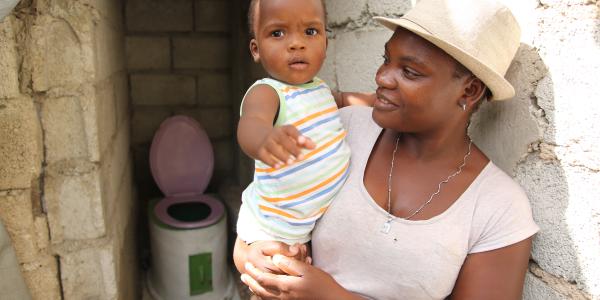
Household Subsidies
SOIL is testing the EquityTool, a country-specific wealth survey, to determine the effectiveness of its use for reliably helping to identify at-risk households that may be eligible for reduced fee options for the EkoLakay service.

Climate Finance
SOIL's waste treatment methodology is mitigating ~ 0.7MT of CO2eq per household per year. The SOIL team is exploring opportunities to turn this climate impact into revenue to support the household service.
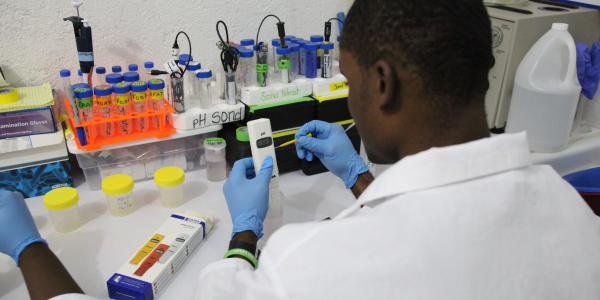
Baseline Sanitation Survey
The collection of baseline sanitation data in high risk priority zones in the Cap Haitian region to understand sanitation ownership, access and household needs and strategies for equitable sanitation service offerings.
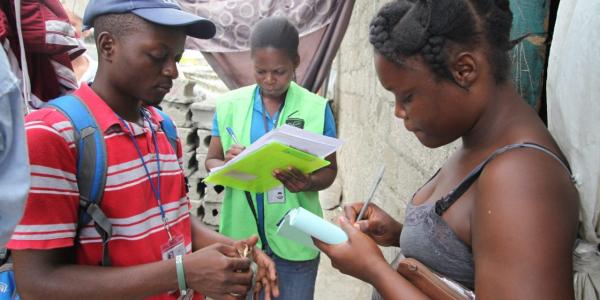
Results-Based Financing
In late 2023 SOIL is piloting an outcomes-payment model in partnership with other stakeholders. Outcome payments will be tied to increase in households on the service and positive sanitation behavior change.
Meet SOIL's Research Team

Maya Lubeck-Schricker
Maya holds an MS in Epidemiology from the University of Washington and specializes in study design and quantitative data analysis to strengthen evidence-based decision-making and address operational challenges within SOIL’s sanitation service. Her career in global health began at Tufts University, working with Dr. Ramnath Subbaraman on projects examining tuberculosis treatment adherence as well as associations between legal and water access in Indian slums. She later consulted for the Gates Foundation on initiatives spanning the burden of Shigella in the Americas, vaccine investment strategy, climate-related health risks, gender equity in health R&D, and the role of AI in global health. Maya now brings this cross-cutting research background to advancing safe, sustainable sanitation in Haiti and beyond.

Bridj Ozeris
After completing his dissertation at the Université Chrétienne du Nord d’Haïti (UCNH), where he explored the intersection of agronomy and social issues, Bridj developed a strong interest in environmental and social justice. This commitment led him to join SOIL in 2021 through the Black Soldier Fly Project, where he has continued to expand his research expertise, particularly in the field of sanitation in Haiti.

Miselie Fanor Pierre
Miselie began working in the WASH sector in 2014, supporting underserved communities and strengthening health institutions through organizations such as the American Red Cross and Save the Children. In 2023, she joined SOIL to further her work with vulnerable communities by advancing safe sanitation research and services.
Latest Blogs on SOIL's Research

New Publication Links Container-Based Sanitation and Human Rights
Haiti's sanitation system leaves 19% of urban households without improved sanitation access. CBS systems can help expand access while also creating safer jobs in Haiti. At SOIL, our strategic objectives are informed by careful research and data. We are also committed to understanding the human....

Deriving financial benefit from SOIL’s climate mitigation action: is it possible?
Ground-breaking research on SOIL’s ecological sanitation service, published in the journal, Nature Climate Change, investigated the potential for container-based sanitation to mitigate greenhouse gas emissions when compared to other traditional waste treatment methods. The research revealed that....

Windrow Composting: What We’ve Learned from the Pilot Research and Where We’re Going
Over the past year, the SOIL research team began experimenting with windrow composting, as a method for making our waste treatment and composting process faster. The goal of the research was to improve the efficiency of the composting process in order to be able to accommodate more waste at our site....

Women in Sanitation: Interview with Froggi VanRiper
Froggi VanRiper alongside churn study research team As a sustainable sanitation organization working in low-resource contexts, we rely on research and technological innovations to make our service as efficient as possible with the resources available. Providing sanitation in Cap-Haitien is....

Compostable Container Liners to Reduce High Container Costs
SOIL’s Research Team experimenting with compostable container liners In October of last year, SOIL’s research team met up in Cap-Haitien to identify potential opportunities to improve the efficiency of our service in the coming year. One of the opportunities identified during the team session is....

New Research on Container-based Sanitation Models Published in H2Open Journal
Traditional sanitation models – flush toilets – require a reliable water source and sewage infrastructure, both of which can be cost prohibitive and infeasible to build in urban settlements with contested land tenure. The usual alternatives, like pit latrines and septic tanks, are also infeasible or....
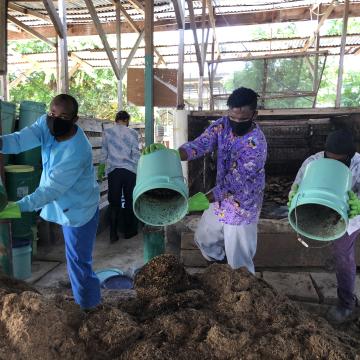
Field Day for the Directors: Launching a New Research Project
SOIL’s HR Director, Director of Operations and Compost Manager We at SOIL are always working to develop innovative approaches to support our growth strategy and further expand our reach to provide accessible, sustainable and reliable sanitation to those that need it the most. Research plays a....
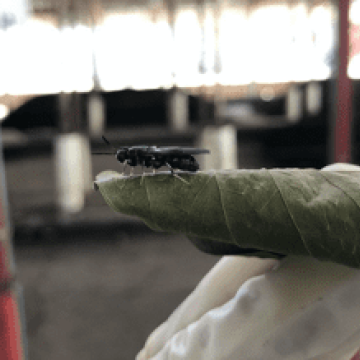
From Larvae to Chicken Feed: What’s New with Black Soldier Fly Research
In 2019, the SOIL Research Team began testing out the possibility of using black soldier fly larvae (BSFL) as a new, additional method of transforming waste from our EkoLakay sanitation service into another valuable resource. Led by SOIL Waste-to-Resource Consultant, Michèle Heeb, SOIL experimented....
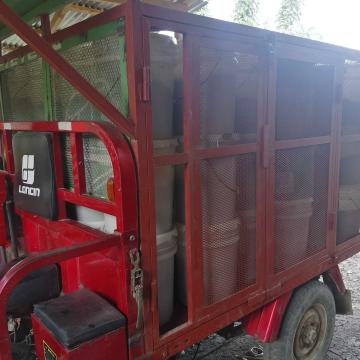
Improving Collections with Human-Centered Design
As a part of SOIL’s research and development initiatives and human centered design optimization, our research team has identified a number of projects to help improve efficiency for our service. This includes ongoing research on identifying ways to make the composting process faster and cheaper so....
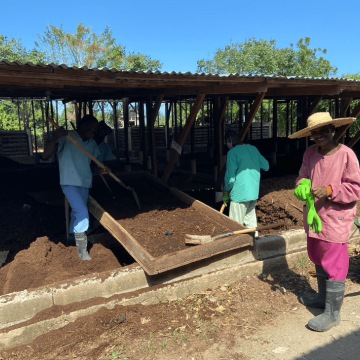
Better, Cheaper, Faster: Researching Ways to Improve SOIL's Composting Process
Over the last six months, SOIL has made exciting and significant progress in expanding access to dignified and reliable sanitation for vulnerable communities in Haiti. In order to continue on this upward trend, we at SOIL are working hard to produce innovative approaches to support our growth....